

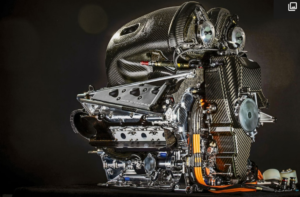
We’ve all seen those deceptive advertisements for the ostensibly “electric turbo.” These low-cost devices are marketed as turbochargers, but they’re very just ducted fans or blowers, good only for blowing smoke. Instead, we’ll look at the cutting edge of what’s known as electric powered turbocharger technology. We’ll inform you about the revolutionary “e-turbos” perfected on Formula 1 (F1) racing’s V6 MGU-H powerplants, which is why this now-mature turbo revolution will arrive at your local dealer in the coming years. It is about building the next generation of power-generation technology, improving fuel economy, and making ever-smaller engines accomplish as well as or better than the larger engines they replace. It could be the key to extending the life of the internal combustion engine for another generation, and eventually, sooner than you think, making big unlimited, unregulated racing engines produce even more power than they did with traditional turbochargers.
Boost, The Replacement for Displacement
Once we’re in why an electrically powered turbocharger changes everything, let’s take a quick look at the evolution of superchargers and turbochargers, as well as the benefits and drawbacks of each. “There is no substitute for displacement,” we’ve all heard, and I’ve said it myself many times. There is, however, a boost via pushrod engines. Forced induction engines generate more energy because they pressurise or “boost” the air entering the engine above atmospheric pressure with such a supercharger or an exhaust-driven turbocharger. The higher the boost force, the more power the engine can produce.
Both superchargers and turbochargers are devices that move air. The distinction is that a supercharger is traditionally powered by the crankshaft of the engine, whereas a turbocharger is powered by the exhaust gases of the engine. By spinning a shaft that spins a turbine on the inlet side, the turbocharger converts exhaust heat to useful work. The fundamental technologies date back over a century: Gottlieb Daimler was the first to patent a supercharger for forced induction for automotive engines in 1885. Between 1905 and 1916, General Electric developed the first turbochargers for early aircraft engines. They’ve gotten immeasurably better and more efficient as technology has advanced, especially in the last twenty years with the widespread adoption of CNC blade-machining technology, changeable geometry turbines, computer modelling, and electronic engine management, but there’s still room for improvement.
Useful links
Visit eBay to buy remanufactured turbochargers.
Buy best remanufactured turbochargers on precisionturbos.co.uk.
Remanufactured Turbo Specialists NOT Reconditioned Turbos (precisionturbos.co.uk)
Mazda 6 / CX5 Twin Bi Turbocharger 2.2d 822088- 810357 150hp-175hp


