
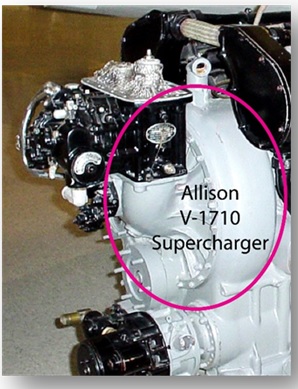
Forced induction devices are classified into two kinds. Variations change in the manner in which the impeller’s spinning is driven. The first is the supercharger, which is powered by the engine through a short drive shaft.
One being the supercharger, which is powered by the engine through a short drive shaft. Figure 4 depicts the supercharger pressing directly on the engine. The turbocharger, sometimes known as a turbo-supercharger, is the second kind of forced induction device. The pump of a turbocharger is driven by the engine’s exhaust. Exhaust gas from high-performance aircraft engines is extremely hot, rapid, and increased. The waste powers a turbo, which in turn drives the rotor.
Generally, rotating pumps beat superchargers. A supercharger “steals” electricity from the engine, lowering its efficiency. If a turbo boosts engine speed by 200 kilowatt while requiring 50 kilowatt first from cylinder to drive its rotors, the net gain is just 150 horsepower.
The flue gas used to propel turbochargers, but at the other hand, is almost free energy. Although turbine back pressure does not greatly limit engine power, this is not entirely accurate. This is why, rather than superchargers, steam turbines are utilised in modern vehicles.
Additionally, dealing with high-pressure, fast-moving, and highly hot exhaust gas is difficult. Two chemicals were required that had not yet been discovered during WWII. Throughout the war, turbocharger production was difficult, and dependability was a major problem. In terms of nanotechnology, World War II arrived a few months too soon for turbos.
Turbochargers also need a substantial amount of heavy tubing to confine the hot gas flows. This tube transports the hot exhaust from the engine to the turbocharger and returns the compressed air to the engine. When a turbocharger is utilised, the quantity of piping required increases significantly. There is room for this pipe in a bomber. The quantity of pipes required in fighters is a significant design challenge. Figure 5 depicts the extensive and complicated plumbing in a turbocharged bomber engine.
Stages and speeds
Superchargers were employed on every combat aircraft throughout WWII. But, a single step of supercharging was only successful up to around 16,000 feet. One option was to supercharge in two phases. Each stage was equipped with its own impeller, diffusion, and horn. This was done in a sequence, with the first step flowing into the second. To avoid overboost, the pilot bypassed one second stage at lower altitude. When the first stage proved inadequate during a rise, it was reintroduced into the flow..
Whereas all air forces used supercharging for the first stage of forced induction, a few also used turbocharging for the second. Due to production issues, turbocharging was substantially more costly. Furthermore, although two stages of supercharging might be achieved without an exchanger on occassion, turbocharging almost always required one.
Another way to fulfill the standard for considerably different pressure rises at high and low altitudes was to equip superchargers with different speeds. This required the employment of a gear and clutch system controllable by the operator. Three charging speeds were available at some Merlin charging stations in the United Kingdom. The bulk of Bf 109s were powered by German DB 601 and DB 605 engines, which carried this trend to its logical conclusion. By utilising fluid contact with the engine, their superchargers were able to seamlessly alter boost over a wide range. Furthermore, these adjustments were done automatically through the use of a cost from £ control. This enabled the jet pilot to concentrate on his objective.
Of all, usually have two or more rates does not rule out the possibility of having two phases as well. Later Merlin engines have two supercharger stages with three speeds each. The BMW 801R, and was in development for the Fw 190 at the end of WWII, had a two-stage, five supercharger.
Useful links
Visit eBay to buy remanufactured turbochargers.
Buy best remanufactured turbochargers on precisionturbos.co.uk.
Remanufactured Turbo Specialists NOT Reconditioned Turbos (precisionturbos.co.uk)
BMW 320D/520D Turbocharger MHI 49335-00644 TF035HL
Audi A3 TDi 140hp Turbo BorgWarner BV40 VNT 54409700007 54409700002 54409880002


