

What if you could “boost” preliminary turbine speed to resolve lag without using an auxiliary supercharger, but by immediately spinning up a turbocharger’s turbine segment with a small but extremely powerful electric motor. It wasn’t until the early years of the 20th century century, when turbochargers had become popular across a wide range of models, that the industry became interested in e-turbos, as global gasoline prices began to skyrocket, particularly in Europe. However, new projects in electric motors and advanced battery technology, as well as a significant “push” from the Formula 1 open highway race series, were required to get the idea off to a flying start. Garrett Motion, for example, worked with Scuderia Ferrari, combining its 65 years of turbocharging expertise and electric turbo assist tests with Ferrari’s F1 engine and chassis expertise.
If you think NASCAR, Top Fuel dragsters, or indeed Bonneville LSR cars are the pinnacle of piston-engine performance, you’ve been missing out on pure engine efficiency. F1 engine rules were significantly revised in 2014 to initiate the process of transitioning away from hydrocarbon-based fuels, and they remain largely unchanged as of late 2020. The current F1 1.6L V6s have only one turbocharger. Nonetheless, according to the SAE “net” horsepower spec J1349, these engines produce approximately 850 hp at the flywheel on gasoline . That’s remarkable enough on its own, but the engines now produce an additional 150 to 160 horse power thanks to a sophisticated waste heat recovery that commonly otherwise lost heat energy produced by the braking system and “discarded” exhaust gases.
The hybrid, turbocharged power plants used by F1 are referred to as “Motor Generator Unit-Heat”. It is a true hybrid turbocharger that combines a traditional turbocharger with a high-speed electric motor that rotates the turbo up to speed, producing boost as soon as the throttle is opened—exactly like a supercharger, but without the bloodsucking drag of a belt, pulleys, or supercharger rotor friction.
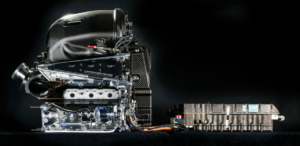
Another critical advantage of an electrically assisted turbocharger is the elimination of lag: An e-turbo can be sized without regard for transient response or turbo lag to develop the best energy and boost curve for a given engine/driveline mixture. This holds true for both racing and potential street use. When it happens to come to turbochargers, bigger is better these days.
Useful links
Visit eBay to buy remanufactured turbochargers.
Buy best remanufactured turbochargers on precisionturbos.co.uk.
Remanufactured Turbo Specialists NOT Reconditioned Turbos (precisionturbos.co.uk)
Audi A3 / VW Golf / Passat / Eos / Scirocco/ Tiguan Turbo 5439 970 0137/0139


