
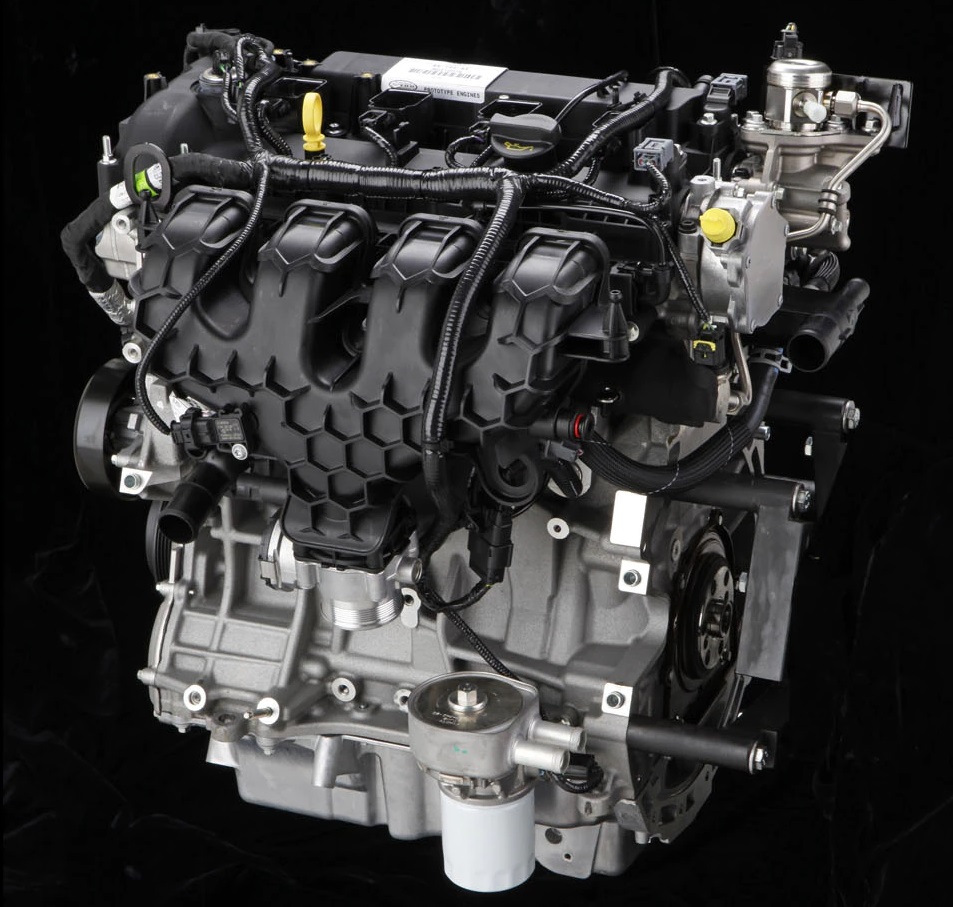
Problems in Ford 2.0 EcoBoost Engine
Ford’s 2.0L EcoBoost is a turbocharged has a power range of 200-252hp and a torque range of 221-270lb-ft, combines modest power levels with excellent fuel efficiency. Its engine has inline-four-cylinder. The 2.0 EcoBoost had a substantial upgrade in 2015.
1st Gen 2.0 EcoBoost
Despite being substantially overhauled in 2015, the first-generation engine was not a flop. This is the first EcoBoost engine to feature twin-independent variable cam timing, whereas the 2.3L and 3.5L engines employed more traditional VVT technology.
2nd Gen 2.0 EcoBoost
In 2015, or made significant changes to the 2.0 to improve performance and fuel efficiency. However, the actual reason for the new engine is because the Ford/Mazda cooperation has ended, forcing Ford to build its own 2.0 EB engine rather than relying on the Mazda L engine.
The redesigned aluminium block, cylinder head with incorporated exhaust manifold, and twin-scroll turbocharger were all part of the 2nd Generation model. Furthermore, the BorgWarner twin-scroll turbo has an effective wastegate.
Ford 2.0 EcoBoost Common Problems
- Exhaust Manifold Crack
- Failure of a Low-Pressure Fuel Pump
- Carbon Accumulation
- Failure of the Turbo/Boost Control Solenoid
Symptoms of a Cracked Exhaust Manifold
The engine is making a whining, whining, or chirping noise.
- mediocre performance
- Excessive turbocharger boost or psi
- Inadequate acceleration
- odours of exhaust fumes inside the vehicle
Symptoms of a Failing Boost Solenoid
- Under acceleration, the engine produces little boost.
- Rapid variations in boost pressure
- Inadequate performance, lack of power
- Fuel efficiency has decreased.
- Engine code P0299 and check engine light
High-Pressure Fuel Pump Failure
- mediocre performance
- The air-to-fuel ratio is too low.
- Idling in a rough manner
- Inadequate acceleration
- The engine light is on.
- Misfires in the engine
Carbon Build-up Symptoms
- Misfires in the cylinders
- Inadequate acceleration
- Performance lagging
- Idling in a rough manner
Reliability
The 2.0 EcoBoost engine is dependable. There aren’t many frequent problems in general, and the internals and essential engine components endure a long time. Despite the fact that Ford developed their block in Gen 2 rather than using the Mazda block in Gen 1, all variants are almost equally reliable.
These engines should easily travel 150,000 miles. However, if you surpass specified mileages, you should expect to fix various material components of the engine and its systems. On high mileage 2.0 EBs, LPFP/HPFP, water pumps, hoses, turbo seals, and other somewhat expensive problems are common.
Useful links
Visit eBay to buy remanufactured turbochargers.
Buy best remanufactured turbochargers on precisionturbos.co.uk.
Remanufactured Turbo Specialists NOT Reconditioned Turbos (precisionturbos.co.uk)
Audi A8 TDi Quattro 233hp Turbo 3.0d 2004/2010 BV50 VNT With Electronic Actuator


