

Turbochargers vs. Superchargers: Which Is Better?
Turbochargers vs Superchargers
The terms “turbocharger” and “supercharger” are now part of the US language. All of the politicians, TV reporters, and some comedians in automobiles get coffee, they are often expressed by all people. And, while the two expressions are generally recognized to indicate something that adds energy, strength, or emotion to it, accelerates, or increases, many people are not aware of technologies that truly mean these phrases. What are turbochargers, and which ones are better?
More Power Requires More Air
The power generated by an internal combustion engine is largely a result of the amount of fuel that it can consume and how fast and efficiently it transforms this heat into mechanical strength. However, gasoline requires air (really air-containing oxygen) to burn, therefore a motor’s high output primarily depends on how much air that fuel can consume.
This is why it is necessary to force an engine to fuel more air than it usually would consume so that it can burn more fuel and create more power. A turbocharger or supercharger can supply this additional intake of air. They both function and perform quite differently, yet they are air compressors.
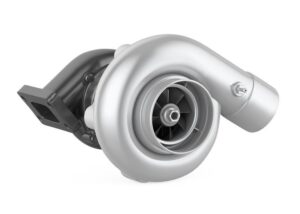
A turbocharger harnesses the speed and thermal energy of hot, searing gases (and expanding gases) which rush out from the cylinders of the engine to spin a turbine which moves a tiny compressor or impeller, which then puts back more air into the engine. An extra air supply is likewise pumped into the motor by a supercharger, but instead, it is pushed through the motor by curl-up belts or by an electrical engine.
Pros and cons
Each of these techniques for enhancing power has benefits and downsides, but the clearest difference between the rears wheel and the right foot in a turbo-loaded automobile, particularly when you press hard into the throttle, is a tiny delay. Because the turbo charge needs a while before its explosion of more power is delivered — it requires a second to boost the exhaust heat and the pressurization to spin the turbo when you lift the gas pedal. For obvious reasons, it is dubbed “boost lag.”
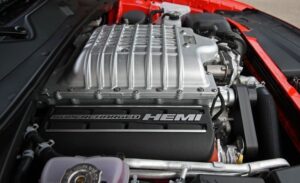
A supercharger has no delay; as its air pump is directly connected to the crankshaft of the engine, it spins and reacts quickly. The power it gives, and the engine reaction you feel through the trousers’ seat quickly rise proportionately as far as the accelerator is pressed.
While the main disadvantage of the turbo lags in boosting, efficiency is the supercharger. As a supercharger utilizes the engine’s own power to spin, it draws power – more and more from it as the motor reverses upwards. For this reason, supercharged motors are less fuel-efficient. However, supercharging regulations are required to produce mega-power with a rapid throttle reaction. The Chevrolet Corvette Z06 and the Dodge’s 700-plus-hp SRT Challenger Hellcats and Demons are used by many large-scale Muscle engines like the 650-HP Chevrolet Corvette Z06.
Useful links
Visit eBay to buy remanufactured turbochargers.
Buy best remanufactured turbochargers on precisionturbos.co.uk.
Remanufactured Turbo Specialists NOT Reconditioned Turbos (precisionturbos.co.uk)
Land-Rover Range Rover 4.4 L TDV8 Turbocharger AJD-V8 Garrett Gt15 793829


